The Amalfi Coast: Where the Mountains Meet the Mediterranean
Cliffside villages, hand-pressed limoncello, and roads that dissolve into the sea. A traveler's guide to one of the most beautiful coastlines on Earth — and how to get there without overpaying.

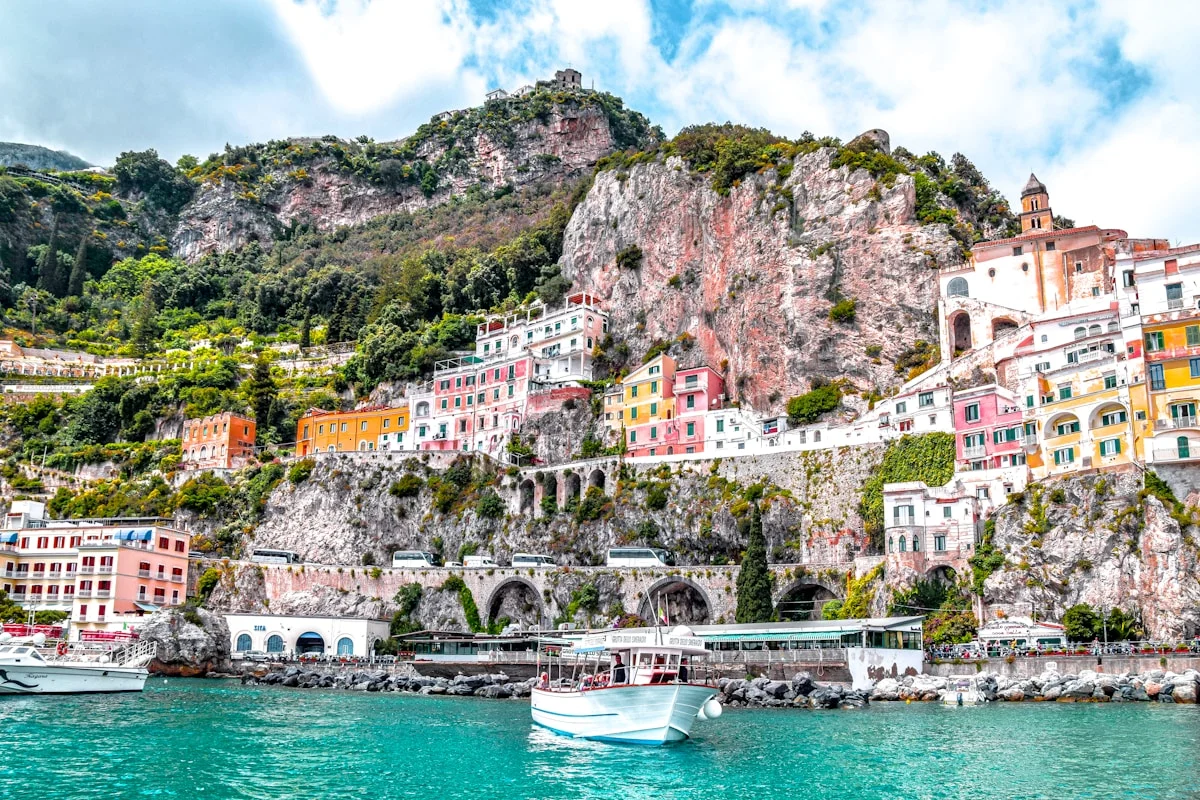
There is a stretch of road in southern Italy where the asphalt clings to the cliff like it’s holding on for its life. To your left, limestone walls rise straight up, ancient and indifferent. To your right, the Tyrrhenian Sea stretches out in a shade of blue that doesn’t exist in paint swatches. Somewhere below, a village the color of sunset spills down the mountainside toward a harbor no wider than a tennis court.
This is the Amalfi Coast. And no photograph has ever done it justice.
The geography of awe
The Costiera Amalfitana runs 50 kilometers along the southern edge of the Sorrentine Peninsula, between Positano in the west and Vietri sul Mare in the east. UNESCO designated it a World Heritage Site in 1997, citing it as “an outstanding example of a Mediterranean landscape” — which is a bit like calling the Sistine Chapel a “nice ceiling.”
The coast is defined by verticality. Villages don’t sprawl — they cascade. Streets become staircases. Gardens hang from terraces cut into rock centuries ago. Lemon groves grow on slopes so steep that the fruit is still harvested by hand and carried down in baskets.
There are thirteen towns along the coast, each with a distinct character. But three define the experience.
Positano: the one you’ve already seen
Positano is the postcard. Pastel buildings tumble down a near-vertical cliff to a crescent of dark sand. Bougainvillea drapes over every railing. The Church of Santa Maria Assunta sits at the center with its majolica-tiled dome, the only horizontal surface in sight.
It is also, frankly, the most crowded. In peak season (June through August), the single road through town becomes a slow procession of tour buses and Vespas. The beach fills by 10 AM. Restaurant prices reflect the view, not always the food.
When to go: Late September or early October. The crowds thin. The water is still warm from summer. The light turns golden earlier in the afternoon. Prices drop 30–40% at most hotels.
Where to stay: Skip the beachfront. The best views — and the best value — are higher up. A room at Le Sirenuse is the fantasy (and the splurge). For something more grounded, look at Villa Treville or the quieter guesthouses along Via Pasitea.
Ravello: the one that deserves more time
If Positano is the coast’s face, Ravello is its soul. Perched 350 meters above the sea, this hilltop town has no beach, no harbor, no Instagram-friendly sunset bar. What it has is silence, gardens, and some of the most extraordinary views in Europe.
Villa Rufolo — with its Moorish arches and terraced gardens — inspired Wagner to write parts of Parsifal. Villa Cimbrone, at the end of a winding path through walled gardens, ends at the Terrace of Infinity: a balustrade lined with marble busts, looking out over nothing but sea and sky.
The Ravello Festival runs from June through September, staging concerts on a platform suspended over the gardens. Classical music, Mediterranean air, the Amalfi coastline as backdrop. It’s one of those experiences that makes you briefly believe the world is well-designed.
Getting there: Bus from Amalfi town (25 minutes, hairpin turns, €1.30). Or hire a driver — worth it for the first visit, if only because you won’t be able to look at the view while also watching the road.
Amalfi town: the one with history
Amalfi itself — the town that gave the coast its name — was once a maritime republic that rivaled Venice and Genoa. The Cathedral of St. Andrew, with its striped facade and 62 steps, dominates the main piazza. Behind it, the Chiostro del Paradiso houses Romanesque columns and 13th-century frescoes.
The town is smaller than you’d expect. The main street, Via Lorenzo d’Amalfi, runs from the cathedral to the harbor in about three minutes. Side streets lead to paper mills (Amalfi was famous for its handmade paper), lemon groves, and trattorias where the pasta is still made that morning.
Don’t miss: The Valle delle Ferriere — a nature reserve above town with waterfalls, rare ferns, and a microclimate so humid it feels subtropical. The hike takes about two hours round trip and costs nothing.
The food, honestly
Forget what you think you know about Italian food from restaurants outside Italy. On the Amalfi Coast, the cuisine is defined by three things: lemons, seafood, and simplicity.
The lemons here — sfusato amalfitano — are the size of softballs, with thick, fragrant skin and juice that’s sweeter than you’d expect. They end up in everything: limoncello (obviously), lemon risotto, lemon granita, delizia al limone (a sponge cake soaked in lemon cream that will ruin all other desserts for you).
Seafood is served hours after it left the water. Colatura di alici — a fish sauce made in Cetara from anchovies aged in wooden barrels — is the coast’s secret ingredient. A plate of spaghetti with colatura, garlic, and olive oil at a harbor-side table in Cetara is one of the best meals you’ll eat in Italy. It costs about €12.
Getting there
The Amalfi Coast has no airport. The nearest options:
| Airport | Code | Distance | Best for |
|---|---|---|---|
| Naples (NAP) | NAP | 65 km / 1.5 hrs | Most flights, best connections |
| Rome Fiumicino (FCO) | FCO | 280 km / 3 hrs | If Naples fares are high |
| Salerno (QSR) | QSR | 25 km / 40 min | Limited flights, closest |
From North America: Fly into Naples (NAP). Direct flights from JFK on multiple carriers. One-stops from most US cities through London, Frankfurt, or Rome.
From India: Route through Dubai (EK), Doha (QR), or Istanbul (TK) to Naples. Prices are typically ₹55,000–₹85,000 round trip in economy.
From the UK: Direct to Naples from London (BA, easyJet, Ryanair), Manchester, and Edinburgh. Budget carriers make this a surprisingly affordable trip — fares as low as £40 one way if you book early.
The transfer
From Naples airport to the Amalfi Coast, you have four options:
- Private transfer (€120–160): Door to door, no stress. Book through your hotel.
- Curreri bus (€10): Direct from Naples airport to Sorrento, then SITA bus to Amalfi.
- Train + bus: Circumvesuviana train to Sorrento (€4), then SITA bus along the coast (€2.50).
- Ferry (seasonal): From Salerno or Sorrento to Amalfi/Positano. The most scenic option.
When to go
| Season | Weather | Crowds | Prices |
|---|---|---|---|
| Apr–May | 18–22°C, occasional rain | Moderate | Mid-range |
| Jun–Aug | 28–32°C, dry | Peak — very crowded | Highest |
| Sep–Oct | 22–26°C, warm sea | Thinning | Best value |
| Nov–Mar | 10–15°C, rainy | Nearly empty | Lowest (many closures) |
The sweet spot is mid-September to mid-October. Warm enough to swim, quiet enough to breathe, affordable enough to stay an extra night.
One last thing
The Amalfi Coast is not a place to rush. It rewards the traveler who lingers — who sits at a cliffside table long after the espresso is finished, who takes the longer path through the lemon grove, who watches the fishing boats return at dusk and doesn’t reach for the camera.
It is, in the truest sense, a place where less planning leads to more experience. Book the flight. Find a room with a terrace. Let the rest happen.
Compare fares to Naples across 100+ airlines on Sira. No hidden fees, no markup.
Ready to book?
Compare fares across 100+ airlines
No hidden fees, no markup — just the lowest price available.
Search flights on Sira