

Google Flights Doesn't Show You Every Fare — Here's What It Misses
Google Flights, Skyscanner, Kayak — these platforms search dozens of sources at once. Here's how aggregators find fares, why prices differ between them, and what they can't show you.
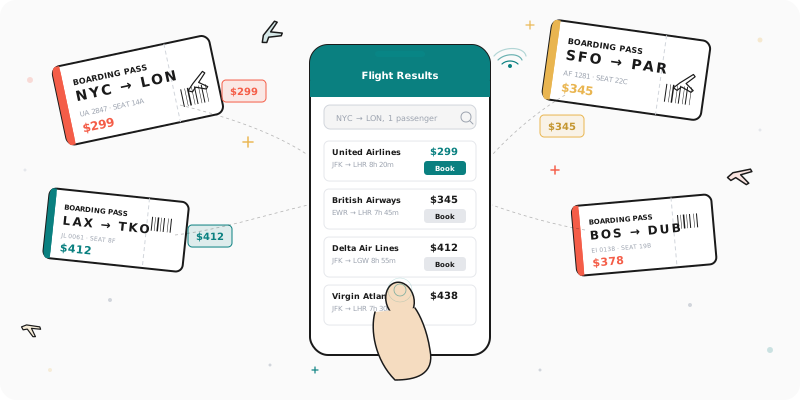
You search for a flight on Google Flights and see 47 results from 12 airlines in under two seconds. Where did all that data come from? The answer is aggregation — and the technology behind it is more complex than it looks.
What an aggregator does
An airline aggregator (also called a metasearch engine) searches multiple fare sources simultaneously and displays the results in one place. Instead of checking Delta’s website, then United’s, then Expedia, then Kayak individually — an aggregator does all of that in a single search.
The major aggregators: Google Flights, Skyscanner, Kayak, Momondo, and Kiwi.com.
The key distinction from an OTA: a pure aggregator doesn’t sell you the ticket. It compares prices across sources and then redirects you to the airline or an OTA to complete the booking. The aggregator earns a referral fee (called a CPC — cost per click) when you click through.
How they pull fares
Aggregators connect to fare data through multiple channels:
GDS feeds — They query Amadeus, Sabre, or Travelport to get published fare availability. This is the same data OTAs use.
Direct airline APIs — Some aggregators have direct connections to airline pricing systems, sometimes through NDC. This lets them show fares that may not be in the GDS.
OTA feeds — Aggregators also pull prices from OTAs like Expedia, Booking.com, and Trip.com. This is why you’ll sometimes see the same flight listed multiple times at different prices — each from a different seller.
Cached vs. live pricing — To return results in under two seconds, aggregators often show cached (pre-fetched) prices first, then verify with a live check when you click through. This is why the price sometimes changes between the search results page and the booking page.
Why prices differ between aggregators
Not all aggregators connect to the same sources. Google Flights has direct partnerships with most major airlines and shows airline-direct pricing prominently. Skyscanner connects to a wider range of OTAs, including smaller regional ones, which sometimes surface cheaper fares. Kayak leans heavily on its parent company Booking Holdings’ ecosystem.
Each aggregator also applies different ranking algorithms. Some prioritize price, others weigh flight duration, connection quality, or partnerships. The “cheapest” result on Google Flights and Skyscanner for the same route on the same day can differ by $20-50 because they’re pulling from different seller pools.
What aggregators can’t show you
Consolidator fares — These are private net fares negotiated between airlines and wholesale companies. They bypass public distribution entirely and never appear on any aggregator.
Some NDC-exclusive fares — Airlines like American and Lufthansa have fares that only appear through NDC connections. Not all aggregators have NDC integrations, so these fares may be invisible to them.
Post-booking support — Since aggregators redirect you to a third party to book, your customer service relationship is with whoever sold the ticket — not the aggregator. If something goes wrong, Google Flights can’t help you rebook.
Where Sira fits
Sira sells published fares directly — the same prices airlines file with ATPCO — with no added markup or hidden fees. No consolidator games, no mysterious price jumps at checkout. Transparent pricing from search to booking. Search flights on Sira →
Ready to book?
Compare real-time fares across 100+ airlines. No hidden fees, no markup — just the lowest price available.
Search flights on Sira →